

Commentary
The Islamic Republic’s words and actions suggest that it has changed its approach to both diplomacy and war.
Mohammad Ayatollahi Tabaar
{
  "authors": [
    "Noah Gordon",
    "Lucy Corthell"
  ],
  "type": "commentary",
  "blog": "Emissary",
  "centerAffiliationAll": "dc",
  "centers": [
    "Carnegie Endowment for International Peace"
  ],
  "collections": [
    "Clean Energy Transition",
    "The Iran War’s Global Reach"
  ],
  "englishNewsletterAll": "ctw",
  "nonEnglishNewsletterAll": "",
  "primaryCenter": "Carnegie Endowment for International Peace",
  "programAffiliation": "SCP",
  "programs": [
    "Sustainability, Climate, and Geopolitics"
  ],
  "regions": [
    "Iran"
  ],
  "topics": [
    "Economy",
    "Trade"
  ]
}
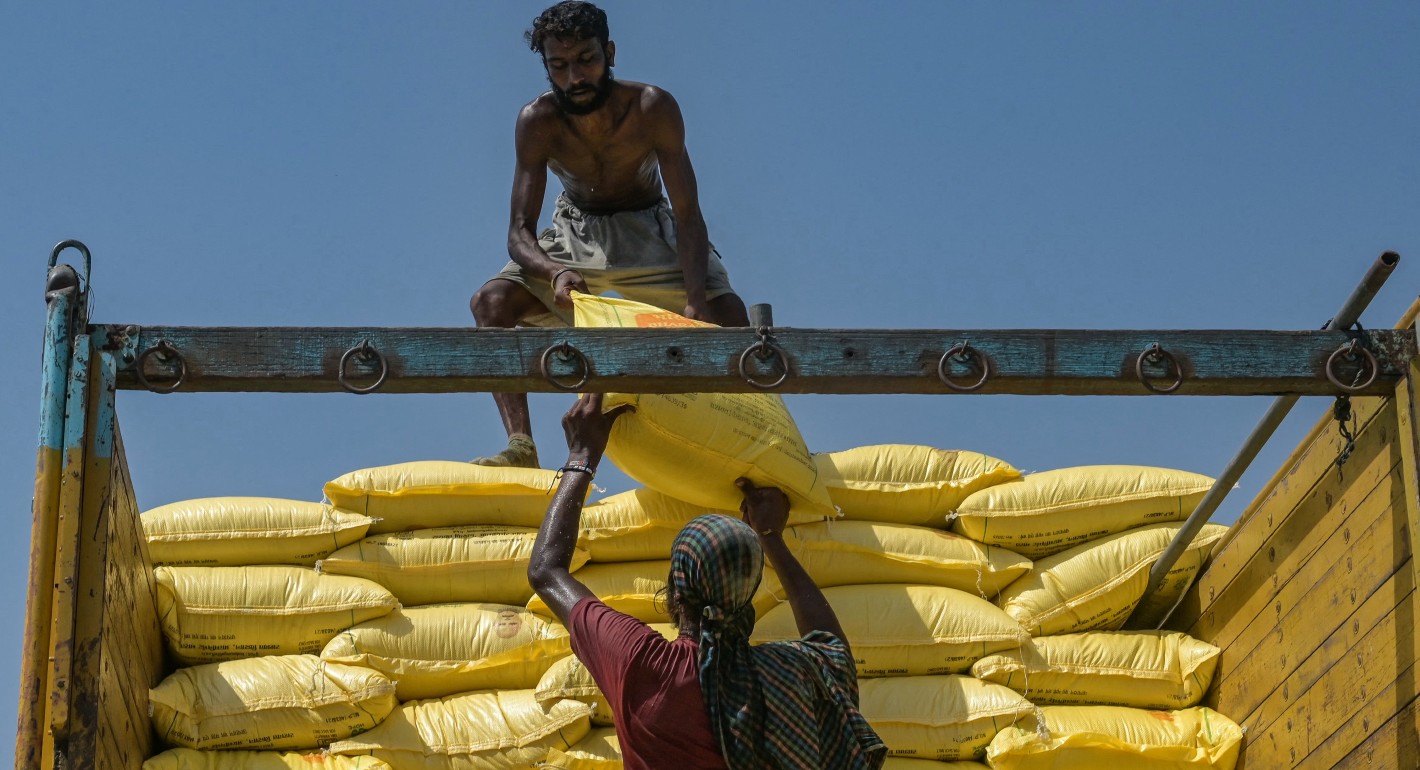
Workers load sacks of fertilizer in Amritsar, India, in 2025. (Photo by Narinder Nanu/AFP via Getty Images)
Even if the Iran war stops, restarting production and transport for fertilizers and their components could take weeks—at a crucial moment for planting.
The war in Iran has already claimed many direct victims, from the more than 100 children killed in a U.S. strike on an Iranian elementary school, to the Iranians inhaling toxic substances released by Israeli strikes on oil facilities in and around Tehran, to those soldiers and civilians killed and wounded across the region by the conflict. And no matter how quickly the fighting ends—wars often resist one protagonist’s desire to end them—its indirect victims could include billions of people hoping for good harvests and affordable meals in the coming year.
The Gulf region is a key producer not only of liquified natural gas (LNG) and oil products but also of fertilizer. About one-third of global seaborne trade in fertilizers typically passes through the Strait of Hormuz, which has been nearly entirely closed since the United States and Israel attacked Iran on February 28. In particular, Gulf countries are important producers of nitrogen fertilizers, which depend primarily on natural gas burned at high pressure in the presence of hydrogen to synthesize ammonia. (The hydrogen usually comes from natural gas as well.)
But it’s not just that Gulf fertilizer can’t make it to export markets such as Sudan, Brazil, or Sri Lanka. It’s also that fertilizer producers elsewhere lack key ingredients. This is where the second-order effects of a supply chain crisis appear, just as they did during Russia’s invasion of Ukraine in 2022, which sent fertilizer prices soaring.
Deprived of their natural gas supplies from Qatar, fertilizer firms in India, Bangladesh, and Pakistan have had to shut down production. Egypt, another important producer, has lost its gas imports from Israel and must turn to the ever-pricier LNG market. The benchmark price of urea, the most widely traded fertilizer, is up about 30 percent in the last month.
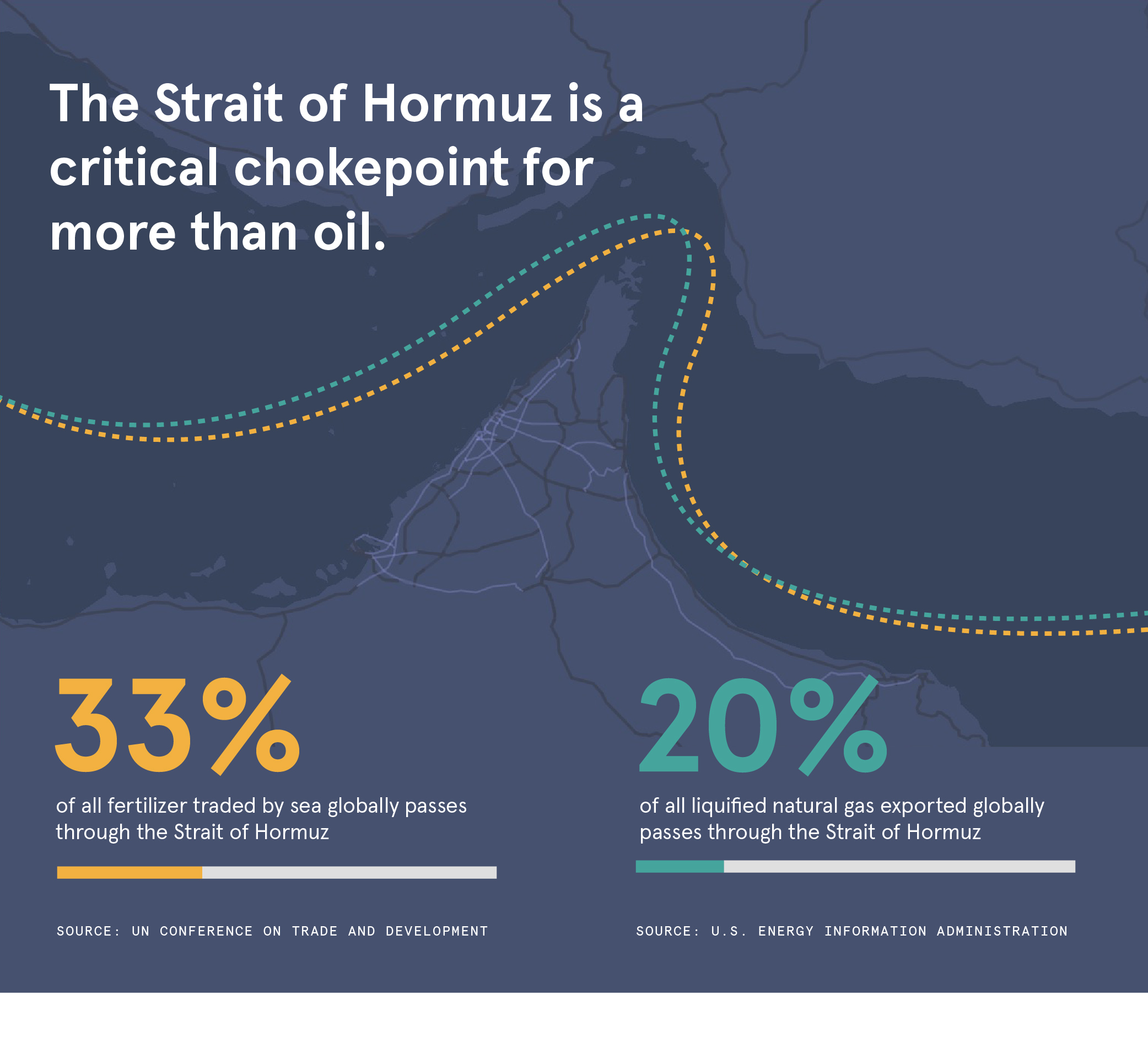
The damage extends beyond nitrogen to another key crop nutrient, phosphorus. Gulf countries produce around 20 percent of phosphate fertilizers, and as well as a quarter of global sulfur, which is largely an oil and gas byproduct. Fertilizer producers need sulfur (sulfuric acid, to be precise) to turn phosphate rock into a liquid that plants can absorb.
Because fertilizer has less value than oil and gas, political and business leaders expend fewer resources to make sure it keeps flowing. A ship captain bold enough to brave drone strikes and dash through the Strait of Hormuz would prefer to carry oil than fertilizer, a preference that would be shared by any potential navy escort, which the United States is in any case not yet able to provide. G7 countries don’t maintain strategic fertilizer reserves to match their oil stockpiles. The pipeline that Saudi Arabia built to enable exports through the Red Sea rather than the Strait of Hormuz is for oil, not ammonia products.
To be clear, about half of fertilizer is not traded internationally at all. The United States, a land of abundant natural gas, produces about three-quarters of the fertilizer it consumes, while China is even more self-sufficient. But because these are globally traded commodities, problems in one place ripple throughout the global economy. Even before the war in Iran, China was restricting fertilizer exports to protect its own farmers—but it needs Brazil, which is highly dependent on Middle Eastern urea, to be able to grow soybeans to feed to the pigs and cows in both countries. U.S. importers have seen the price of urea at the port in New Orleans rise more than 25 percent since the end of February, pushing the president of the American Farm Bureau Federation to write a plaintive letter to President Donald Trump warning that this “production shock” threatens national security. The price of urea as a ratio of the price of corn is approaching record levels.
This bad news comes at a bad time, just before spring planting season in the Northern Hemisphere. Farmers typically order fertilizer in March to apply in April or May. Now, the president of the South Carolina Farm Bureau is worried “farmers are not going to be able to finance planting their crop” while economists and fertilizer analysts expect “inflation going through the roof” over coming months as crops planted today are supposed to be arriving in supermarkets. Like anyone else with a fossil-fueled vehicle, U.S. farmers are also paying more for fuel since the war started, diesel fuel being the relevant one for agriculture.
Understand the world with the latest from our scholars around the world.
As in the 2022 crisis, poorer countries will suffer the most. As Carnegie nonresident scholar Adam Tooze noted, the countries whose fertilizer use (and yields) fell most in 2022 included Côte d’Ivoire, Kenya, Nigeria, and South Africa. The fertilizer shortage of 2022, caused by the loss of many Russian and Belarusian products and a spike in gas prices, was one reason for a stark rise in global food prices in that year. The most dramatic example came from Sri Lanka, whose president had made the baffling decision to ban synthetic fertilizer such as urea and ammonia in 2021. Local agriculture collapsed, as did his government, and he had to flee the country. (Without synthetic fertilizers, some scholars argue, the global population would only be half as large as it is.) In 2022 countries such as Sri Lanka could at least count on foreign aid to help fill gaps. With the U.S. Agency for International Development now shuttered, that safety net may no longer be available.
The fertilizer crisis will cast a spotlight on the inefficiencies in the tremendously productive food system. About 20 percent of food designed for human consumption is wasted and never consumed. Almost 40 percent of cropland is used to grow animal feed at a huge efficiency cost: A cow requires 50 calories of feed to produce one calorie of beef. A third of U.S. corn is used to produce ethanol transport fuels for dubious environmental benefits.
Even if the Strait of Hormuz does open soon, restarting production and transport for fertilizers and their components could take weeks—weeks that Northern Hemisphere farmers do not have. Consumers around the world are already beginning to see higher prices for their gasoline and plane tickets. The more worrisome costs for the most vulnerable—those at the grocery store—are yet to come.

Fellow, Sustainability, Climate, and Geopolitics Program and Fellow, Europe Program
Noah J. Gordon is a fellow in the Sustainability, Climate, and Geopolitics Program at the Carnegie Endowment for International Peace in Washington, DC.
Lucy Corthell
James C. Gaither Junior Fellow, Sustainability, Climate and Geopolitics Program
Lucy Corthell is a James C. Gaither Junior Fellow in the Carnegie Sustainability, Climate and Geopolitics Program.
The Islamic Republic’s words and actions suggest that it has changed its approach to both diplomacy and war.

Mohammad Ayatollahi Tabaar
Why the outcomes of the U.S.-China meetings may be limited.


Aaron David Miller, David Rennie

Instead, governments should adopt climate-friendly measures to address the impact of rising prices.

Henok Asmelash
Tehran may conclude that its ability to disrupt the global economy via the Strait of Hormuz provides enough deterrence to begin quietly rebuilding its nuclear program.

Jane Darby Menton, Mohammad Ayatollahi Tabaar
Here’s why—and what the next president needs to do to fix the process.

Daniel C. Kurtzer, Aaron David Miller