

Commentary
Michael Young
{
  "authors": [
    "Michael Young"
  ],
  "type": "commentary",
  "blog": "Diwan",
  "centerAffiliationAll": "",
  "centers": [
    "Carnegie Endowment for International Peace",
    "Malcolm H. Kerr Carnegie Middle East Center"
  ],
  "collections": [
    "Decoding Lebanon"
  ],
  "englishNewsletterAll": "",
  "nonEnglishNewsletterAll": "",
  "primaryCenter": "Malcolm H. Kerr Carnegie Middle East Center",
  "programAffiliation": "",
  "regions": [
    "Lebanon",
    "United States",
    "Israel"
  ]
}
Source: Getty
A prerequisite of serious talks is that the country’s leadership consolidates majority national support for such a process.
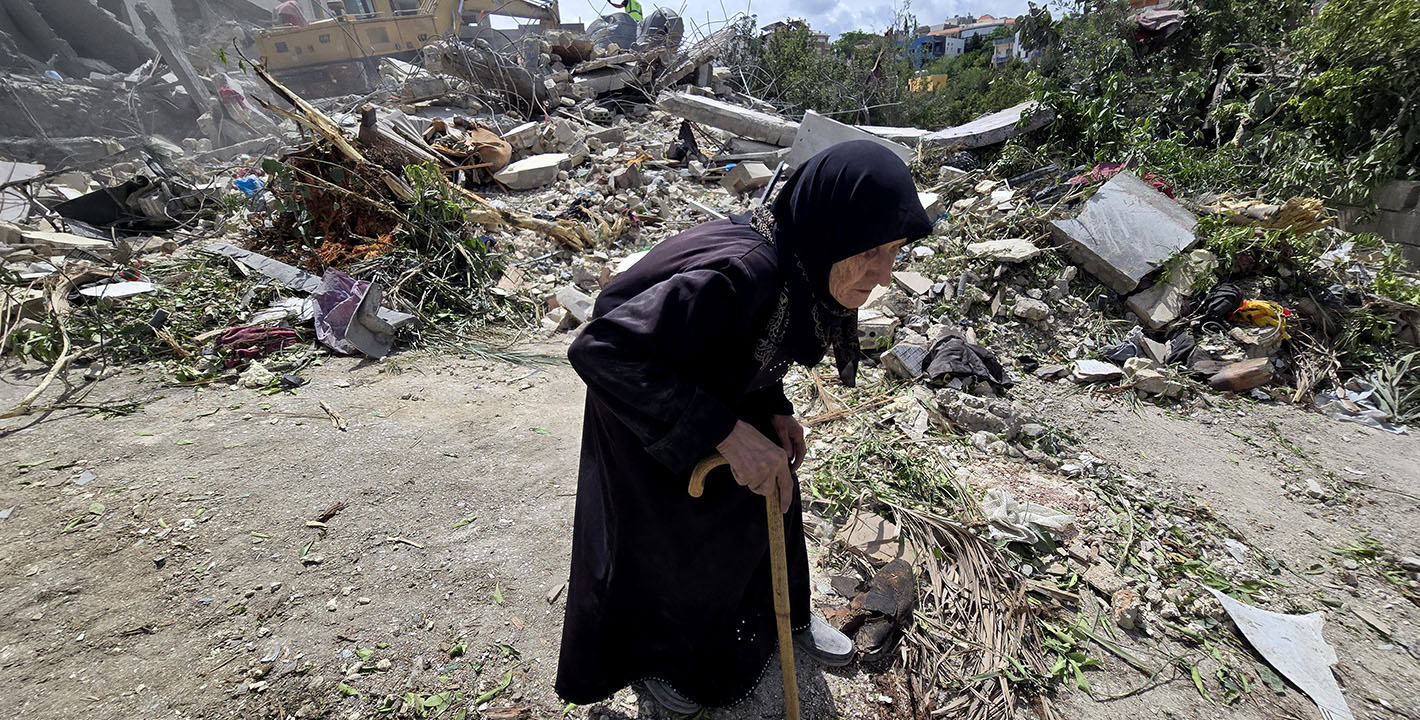
When President Joseph Aoun and Prime Minister Nawaf Salam called for negotiations with Israel several weeks ago, their primary objective was to derail the Israeli onslaught against Lebanon. To an extent they succeeded in doing so, particularly after the murderous Israeli bombings of April 8, which killed some 360 people, mainly civilians, and injured another 1,300 in the space of ten minutes.
Aoun certainly pleased many people on April 27, when he stated, “Some criticize us under the pretext that we went to negotiations without a national consensus, which makes me ask: When you went to war, did you first secure a national consensus?” The president was replying to Hezbollah’s attacks against him and Salam for engaging in direct negotiations with Israel through the Lebanese ambassador in Washington.
Perhaps Aoun did not realize that by equating his approach with Iran’s and Hezbollah’s rocket strike against Israel on March 2, he was likening a sovereign choice by a head of state with an illegal decision by a foreign power and its proxy militia to provoke a war with Israel, against the wishes of the national government. But his point was well taken: If the critics want a consensus, it applies in all cases.
Where the president and prime minister have erred, however, is in the fact that they rushed into negotiations without preparing the groundwork for them. Assuming that a consensus means everyone must agree to negotiations with the Israelis, it was certainly in their capacity to obtain majority support for negotiations early on and use this as leverage with Hezbollah in the dispute with the party over its insistence on a consensus.
Before agreeing to direct talks, Aoun and Salam should have engaged in consultations with all of Lebanon’s major religious and communal leaders, and secure from them formal acceptance, at least in principle, of negotiations. This would have included the country’s senior religious figures, the heads of all major political parties and parliamentary blocs, and former presidents and prime ministers, with the purpose of answering a simple question: “Should Lebanon explore direct talks with Israel if it means putting an end to Israel’s systematic destruction of the country?”
Phrased that way, it is highly unlikely that most of those individuals would have replied in the negative, though some might have. The government could have then pointed to the outcome in its exchanges with Hezbollah by saying it had obtained majority backing for its initiative. It can still do so. But this would not lift its obligation of persuading representatives of the Shiite community, which is the one most directly affected by Israeli actions. However, with the approval of most political and sectarian groups, the president and prime minister would be better placed to argue from a position of strength.
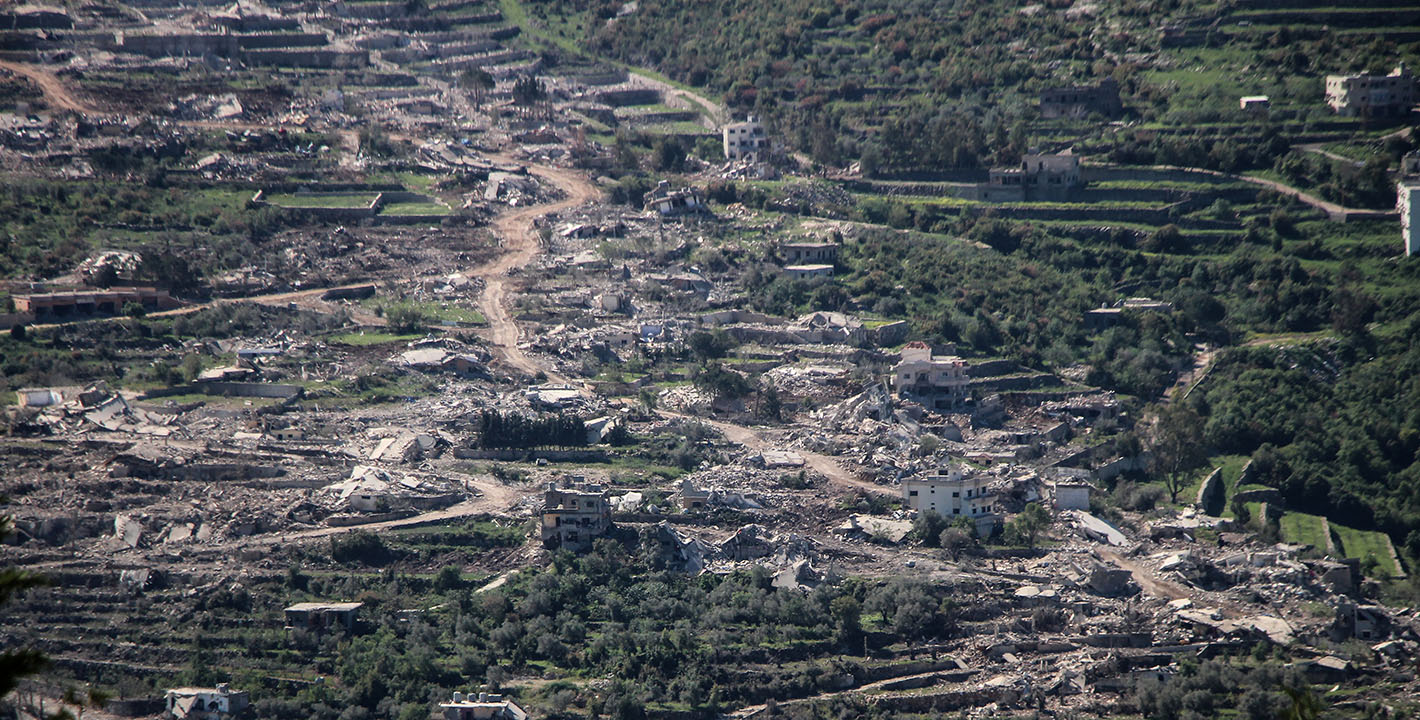
What about the Shiites, then? There was initial anger with Hezbollah in the community after the party fired at Israel on March 2, starting the latest war. However, the situation has since changed. Many Shiites sensed that Hezbollah’s marginalization would soon lead to that of the community as a whole, and rallied to the party’s side, helped by Israel’s methodical demolition of wide areas of southern Lebanon and Beirut’s southern suburbs. In this atmosphere, the margin of maneuver of the speaker of parliament, Nabih Berri, has been severely curtailed, even though his government ministers initially voted in favor of declaring Hezbollah’s military and security activities illegal.
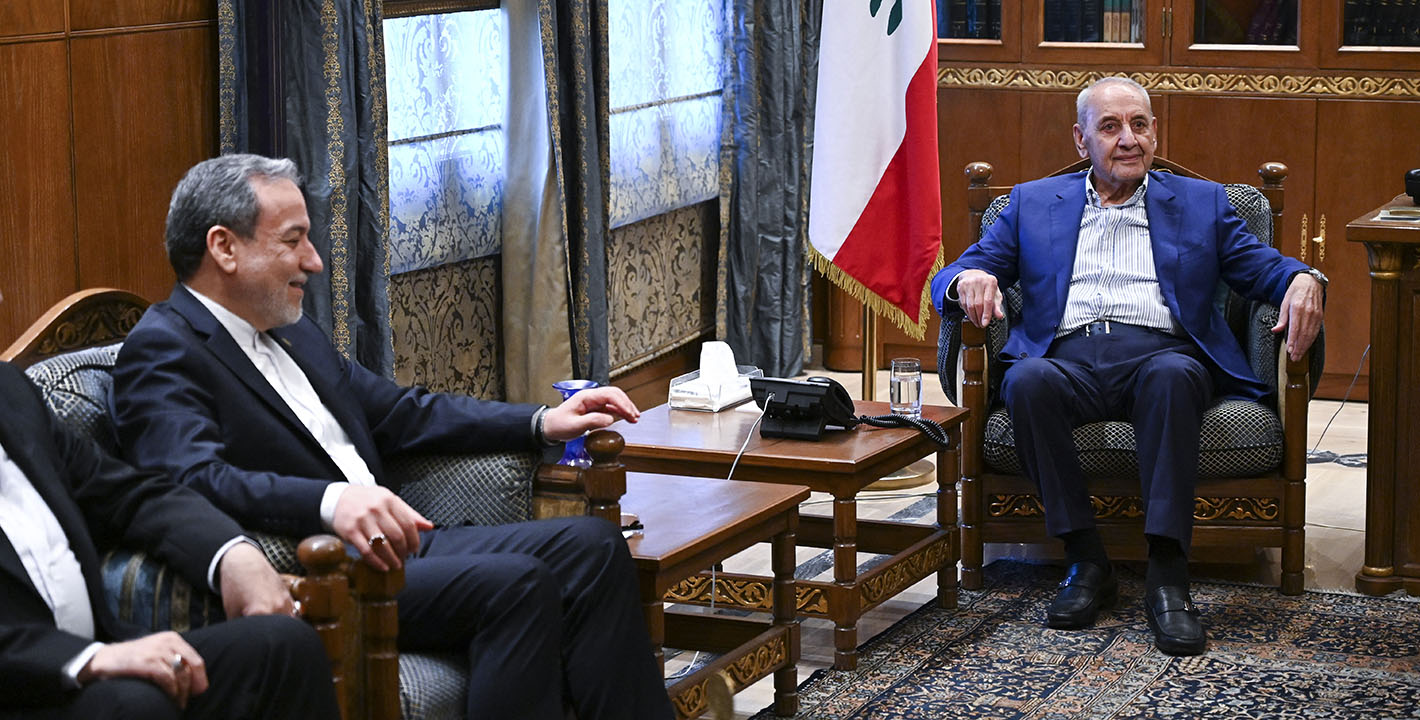
Berri remains a central actor in what happens next. The speaker’s position is that Lebanon should return to the Mechanism in negotiations with Israel—the mainly military consultation format that was revived and expanded after the November 2024 ceasefire in Lebanon—and he opposes peace negotiations or normalization. Berri reportedly agrees with his Druze counterpart, Walid Joumblatt, that Lebanon and Israel should seek to finalize an updated version of the Armistice Agreement of 1949.
In light of this, Aoun said something else quite important in his remarks earlier this week, namely that his objective was to “end the state of war with Israel, similar to the Armistice Agreement.” In other words, the president was signaling that he does not intend to go for a full peace agreement with the Israelis—a new Abraham Accord—contrary to what Israel and the United States would like. Therefore, he could meet Berri halfway on the terms of reference for negotiations.
It is highly doubtful that Berri would be willing to do anything that could lead to a break with Hezbollah, given the mood in his community. However, he may be able to nudge them and the Iranians forward on certain matters, if he acts within the confines of majority opinion in Lebanon (which explains why Aoun and Salam should strive to confirm such opinion), and the government stops short of negotiating a peace agreement. Iran and Hezbollah would not welcome an updated Armistice Agreement, because its practical impact would be to neutralize the southern border as an Iranian channel for military pressure on Israel. However, Berri sees things differently.
The speaker understands that Iran is willing to fight Israel to the last Lebanese Shiite in order to defend itself, which very much contradicts his own political interests, those of his partisans, and those of Lebanon’s Shiites in general. That is why the speaker would probably be willing to work within the parameters of talks aimed at preventing the maintenance of an open military front in south Lebanon, and in this he would almost certainly enjoy the support of a large swath of Shiite public opinion.
That’s why, if a majority of political and religious forces in Lebanon support a return to some version of the Armistice Agreement, Berri could perhaps make the case to Hezbollah and Iran that the Shiite community would only lose by further isolating itself in the country. He might also be able to endorse negotiations outside the Mechanism format, underlining that this is a necessary concession to make in order to halt Israel’s weeks-long razing of southern towns and villages. Such flexibility would help consolidate a unified negotiation framework on the Lebanese side.
Berri would also enjoy regional backing, which would be essential to persuading the United States that now is not the time to push Lebanon into a full peace agreement. The Arab states and Türkiye generally oppose peace negotiations between Lebanon and Israel today, mainly because they want to impose conditions for any future Arab-Israeli peace talks, above all prior acceptance by Israel of a path leading toward Palestinian statehood. Moreover, countries such as Saudi Arabia, Egypt, Türkiye, and Qatar regard Israel as a regional rival, and potential hegemon, and do not want to see Lebanon, or any other Arab state for that matter, absorbed into Israel’s sphere of influence.
Before embarking on negotiations with Israel and naming a delegation, Lebanon’s leadership has to come to an understanding on a negotiating strategy. Joseph Aoun laid the groundwork this week, but it’s now up to Berri to help the president and prime minister make this official and mobilize national support in favor of such a strategy, which would allow the speaker to then speak with Hezbollah. For now, Lebanon’s approach to negotiations is chaotic, with the left hand not knowing what the right hand is doing. This has to end before serious talks can begin.

Editor, Diwan, Senior Editor, Malcolm H. Kerr Carnegie Middle East Center
Michael Young is the editor of Diwan and a senior editor at the Malcolm H. Kerr Carnegie Middle East Center.
Recent Work
Michael Young
Michael Young
Carnegie does not take institutional positions on public policy issues; the views represented herein are those of the author(s) and do not necessarily reflect the views of Carnegie, its staff, or its trustees.
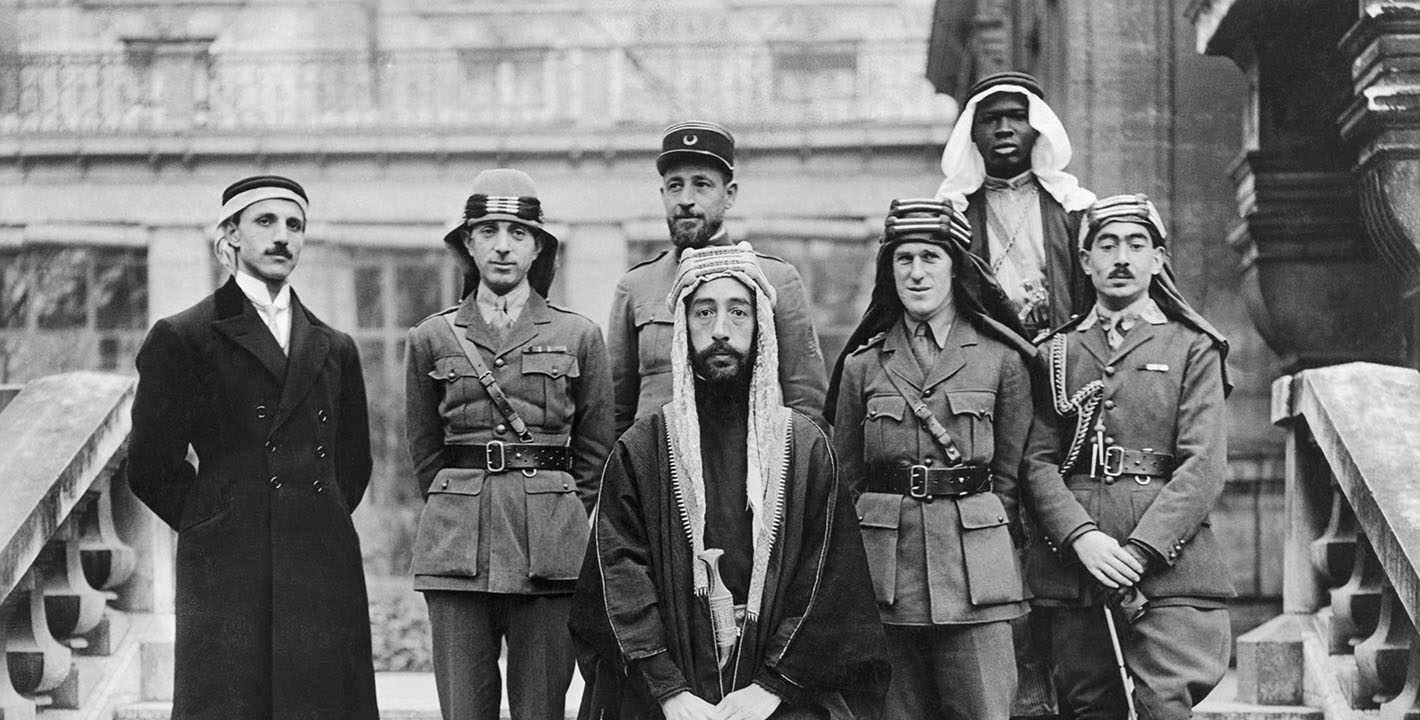
In an interview, Elizabeth Thompson recalls how the country formulated a liberal constitution in 1920, before being denied by France and Britain.
Michael Young
Policy discussion is ignoring that the Palestinian national project is hollowed out and apartheid is a present danger.

Nathan J. Brown
As negotiations with Iran and Lebanon continue, chaos is at the heart of the Netanyahu government’s calculations.
Michael Young
Adversaries are to be degraded so deeply, that reconstitution becomes difficult or impossible.
Nathan J. Brown
Israel is encroaching on the country’s territory, while the Lebanese look askance at one another.

Issam Kayssi