

Commentary
Syria’s worsening drought is no longer a seasonal crisis. This report explains what climate change is doing to rainfall, groundwater, and food security, and what solutions experts say are still possible.
Milia Esper
{
  "authors": [
    "Sima Beitinjaneh"
  ],
  "type": "commentary",
  "blog": "Sada",
  "centerAffiliationAll": "",
  "centers": [
    "Carnegie Endowment for International Peace"
  ],
  "englishNewsletterAll": "",
  "nonEnglishNewsletterAll": "",
  "primaryCenter": "Carnegie Endowment for International Peace",
  "programAffiliation": "",
  "regions": [
    "Middle East",
    "Syria"
  ],
  "topics": [
    "Political Reform",
    "Domestic Politics",
    "Democracy"
  ]
}
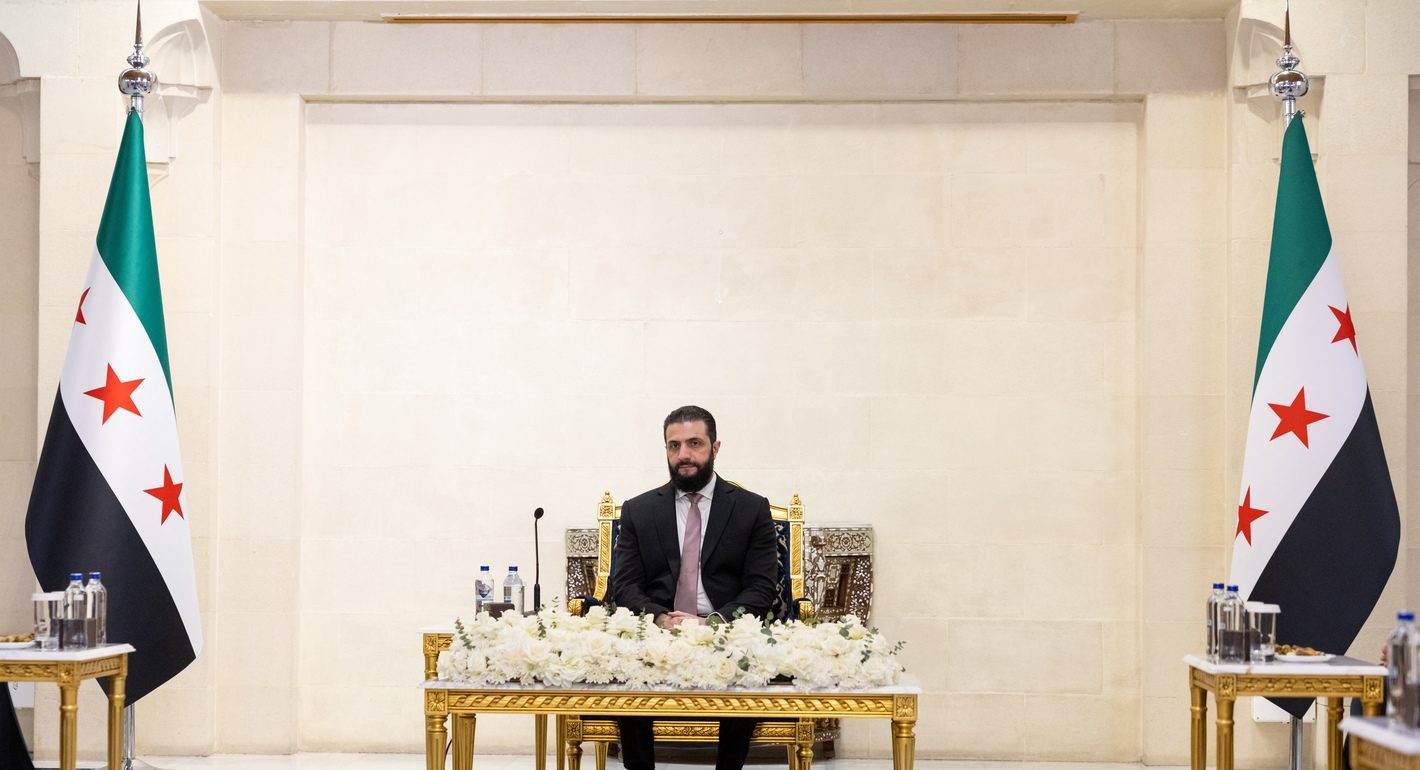
Source: Murat Gok/Anadolu via Getty Images
Syria's transition promised a fresh start. But are old habits of power making a comeback? This analysis looks at the warning signs and what it will take to build a more accountable state.
When Bashar al-Assad's regime collapsed in December 2024, Syrians celebrated not just the end of a dictator, but the promise of a fundamentally different relationship between state and society, hoping for a brand-new social contract. Yet barely 18 months later, President Ahmed al-Sharaa's transitional government shows patterns of governance that are all too reminiscent of the Assad regime’s rule.
Evidence examined in this paper suggests converging patterns worth examining. President al-Sharaa has appointed almost exclusively family members and longtime Hay’at Tahrir al-Sham (HTS) loyalists to control key economic and security decisions. At the same time, he has scaled Idlib's "Salvation Government" model – designed for a small opposition territory – to govern a complex nation-state of 26 million people. Meanwhile, fifty years of normalized cronyism have entrenched bottom-up societal patterns. As a result, Syrians seeking services from government entities would default to the only system they know: finding wasta (connections) with the new power brokers rather than demanding transparent institutions. Without interventions both at the decision-making level and the societal level, Syria risks progressively replacing one authoritarian system with another and reproducing the conditions that caused the civil war.
This raises the important question of this analysis: Is Syria's transitional government implementing a patrimonial1 regime with the same inherent governance dysfunctions, namely cronyism and patronage networks, that precipitated the 2011 uprising and led to the 14-year bloody war? What policy interventions can prevent this consolidation? This question matters urgently as Syria is relying on international actors’ decisions on billions in reconstruction aid, Syrian society’s fabric is fragile and at high risk of renewed sectarian fighting, and regional security hinges on whether the country stabilizes or continues exporting displacement and conflict.
The transitional government under al-Sharaa is in front of a formidable challenge, having inherited the ruins of the state pre-2011: fourteen years of wars have decimated the bureaucratic institutions, international sanctions and Assad regime looting have emptied the central bank reserves, and the economy has contracted by an estimated 85% since 2011. For decades, Assad's authoritarian regime deliberately prevented the development of autonomous institutions: ministries, courts, and civil services all answered to the palace rather than to any legal framework, meaning the transitional government is not reforming existing institutions so much as constructing them from scratch, under time pressure, with limited resources and no democratic mandate. In this context, it is reasonable to expect some degree of reliance on familiar and trusted networks. The HTS loyalists occupying top economic and security positions today are, from the government’s angle, among the few organized cadres with experience administering territory under al-Sharaa's authority.
Moreover, international actors, notably the US, Turkey, and Saudi Arabia, have effectively chosen al-Sharaa as their interlocutor precisely because he has proven capable of reining in previously warring factions that no other figure can currently control. Yet those same factions do not dissolve simply because a transitional government has been declared. HTS commanders, regional warlords, and armed networks that subordinated themselves to al-Sharaa's authority during the military campaign cannot be simply cast aside now that al-Sharaa is in power. Family appointments, opaque contracts, and settlement deals described in this paper may therefore be likened to a distribution of spoils necessary to keep fragile coalitions from backfiring. A leader managing only recently coalesced army factions, such as the Free Syrian Army and the Turkish-backed Syrian National Army, may find that transparency and merit-based appointments can form an existential threat to the new president. These constraints complicate the prescription for institutional reform. However, the argument advanced here is not that patrimonial consolidation is the only response to these conditions, but that it is the response currently being chosen, and that the choices being made now, in the absence of democratic oversight, could determine the future structural character of the Syrian state. And that character could be a new authoritarianism.
Syria's transitional government has exhibited patterns of patrimonial governance through three mechanisms: family monopolization of economic power, loyalty-based appointments over merit, and opaque financial dealings.
The concentration of power within President al-Sharaa's family mirrors patterns observed under the Assad model. When al-Sharaa announced his transitional government formation during a ceremony at the presidential palace on March 29, 2025, he consolidated authority across all branches of the state.
His brother Hazem al-Sharaa serves as deputy head of the Higher Council for Economic Development, leading the commission managing $1.6 billion in assets seized from Assad-era figures. Hazem controls major reconciliation deals with former regime cronies, heads the Sovereign Wealth Fund, receiving national and international investments, and controls Syriatel, Syria's largest telecommunications company, previously held by Rami Makhlouf, Bashar al-Assad's cousin. His other brother, Maher al-Sharaa, serves as secretary general to the president and has been accompanying him to high-profile settings, as well as chairing ministers' cabinet meetings. Damascus's governor is the president's brother-in-law.
It is also worth noting that five members of the Badawi family, who are at the same time previously highly ranked members of the Idlib Salvation government, collectively hold multiple public offices in the current government.
The second aspect of the pattern consists of the systematic placement of former HTS members in key economic positions. Muhammad Omar Qadid, a previously influential HTS officer, was appointed head of the Central Financial Oversight Authority with no prior public announcement. He also manages all state fuel stations through his company, Taiba Petroleum. He owns Sham Bank, established in Idlib in 2020, registered in Turkey but unrecognized by Syria's Central Bank. In April 2025, the Finance Ministry mandated his Sham Cash platform as the sole method for government salary payments, with no competitive bidding. Whether this represents individual appointments or the scaling of Idlib's Salvation government structure to national governance, this model proved functional for administering a small and homogeneous opposition territory through personal networks. Still, it fundamentally lacks the technocratic capacity, sectarian diversity, and institutional sophistication needed to govern 25 million Syrians.
The third mechanism involves opaque settlements with Assad-era economic criminals. While HTS loyalists occupy government positions, Assad-era oligarchs receive private settlements allowing continued business operations. The Illicit Gains Commission maintains a list of 900+ wanted names, yet high-profile figures known for illicit economic roles, like Mohammad Hamsho (approximately $800 million), Samer Fawz, and Salim Daaboul, negotiated confidential settlements. All three built their fortune benefiting from the war and close proximity to the Assad family. Mohammad Hamsho, for example, infamously made his money extracting and smelting metals from buildings destroyed by the regime’s bombing. All three were allowed to keep running their businesses with no prosecutions. No public accounting exists revealing settlement amounts, what percentage of wealth was seized versus retained, or where recovered funds went.
This arrangement pattern signals that opacity and patronage are going to be the modus operandi of the transitional government.
Elite capture succeeds because structural conditions enable it. Four factors create an environment in which patronage becomes the path of least resistance: the absence of democratic oversight, opacity, rhetorical justifications that defer accountability, and fifty years of internalized and normalized cronyism that has become embedded in state institutions.
The democratic vacuum provides the foundational condition. Over one year after Assad's fall, Syria has no elected parliament. The most consequential economic decisions occur through presidential decrees, reflecting the executive power overreach. No independent judiciary reviews those executive actions, and much-needed reforms and laws requiring parliamentary ratification remain stalled indefinitely. Meanwhile, new civil societies are facing more hurdles in registration, and peaceful protests need government permission. Without democratic institutions to check executive power, Syria's government faces no structural barriers to operating under the current patrimonial model.
This vacuum enables the second factor: opacity as policy. Publishing quarterly reports on the Sovereign Wealth Fund, releasing settlement amounts, or disclosing contract awards requires no sophisticated infrastructure, only the political will to do so. The glaring absence of such transparency signals an intent to preserve discretionary decision-making. The Sovereign Wealth Fund operates without a published investment strategy, disclosed board composition, or quarterly reports. The Supply and Procurement Committee operates without public tenders, announcing winners without selection criteria and without conflict-of-interest disclosures. Oil sector tender processes remain unpublicized, and contract awards are made without disclosure, which is particularly troubling because oil revenues were the most corrupt sector under Assad.
The third enabler involves rhetorical strategies that defer accountability. The government deploys arguments Assad used for fifty years: Syria needs stability before elections; transparency can wait until institutions are stronger; democratic processes would prove divisive during reconstruction; economic decisions require efficiency that oversight would slow. With no timeline given of when stability will be achieved, the transitional government is transforming the principle of stability first into an indefinite delay, a strategy used by both Assads during five decades. This rhetoric is increasingly being embraced by loyalist sections of the population and used to silence critical voices.
One analytically underappreciated dimension of Syria's patrimonial pattern is that it is not sustained solely from above. Fifty years of authoritarian rule did not only construct patrimonial institutions; they also produced patrimonial subjects: citizens learned that the formal state was a façade, that licenses required intermediaries, that contracts required connections, and that the rational survival strategy was finding one's wasta with whoever held power at a given moment. Syrians have internalized this behavior and are starting to replicate it in their dealings with the new government, signaling that such a patrimonial system is acceptable. It is making the transition exponentially harder. Early warning signs appear throughout Syrian society: limited public outcry over HTS members occupying key positions; acceptance of opaque settlements with Assad oligarchs; muted civil society response to lack of parliamentary elections timeline. Apart from small-scale urban protests and some limited social media reactions, there are no wide public demands of the government to increase transparency in appointment choices, and short- and medium-term plans for free elections, whether legislative or presidential. Syrians are mainly focused on understanding the newly formed networks to get access to the new power brokers rather than demanding real institutional change.
Moreover, government loyalists have been increasingly using narratives aimed at silencing any critical voice by calling them fulool, or Assad’s remnants. The control of the narrative is often accompanied by a show of force by loyalists during peaceful calls for basic rights and services. They hold HTS flags, bearing Islamist symbols, and call protestors traitors.
Breaking patrimonial patterns requires more than top-down reform; it requires a societal conscious decision to break from an internalized pattern of behavior that perpetuates corruption and a demand for merit-based, transparent systems. But demanding transparency requires believing it's possible. However, fifty years of normalized corruption have created public skepticism, where many Syrians may not believe transparent governance is achievable.
A significant and immediate risk of a patrimonial system is that its structure directly contradicts Syria's transitional justice process, creating new grievances that risk reigniting sectarian conflict.
When Syria's transitional justice was framed in May 2025, it carried an inherently uneven application: Decree No. 20 establishes a commission to address crimes committed by the Assad regime before December 8, 2024. Its scope excludes crimes by non-state actors during the fourteen-year war and crimes perpetrated by government-affiliated groups after Assad's fall. So, when the government makes private settlements with individuals who have financed Assad's war machine, and victims' families watch these perpetrators' financial enablers walk free, they lose hope of receiving justice themselves. This creates a structural contradiction: political crimes fall under formal prosecution mechanisms, while economic crimes enabling those same crimes remain subject to private negotiation.
This selective justice intersects with sectarian dimensions. HTS networks' monopolization of economic and governance positions creates exclusion along community lines, and that exclusion has already produced violence: revenge killings of Alawite families in Tartus in March 2025, security crackdowns on Druze communities, brutal conflict between Druze and Arab tribes in Suwayda in July with documented participation of men in government security attire, and a terrorist attack killing 20 worshippers during Sunday mass at a Greek Orthodox church near Damascus in June. In each instance, the government attributed violence to "uncontrolled factions" or "individual transgressions" while delivering on none of its promises to pursue perpetrators. When economic exclusion is consistently filtered through identity frameworks, Alawite, Druze, Kurdish, and Christian communities all perceive the same message of marginalization, creating multiple simultaneous grievances and the risk of civil conflict.
The ultimate danger involves replicating conditions that sparked the 2011 uprising itself. The revolution targeted not just Assad but the patronage model, including economic exclusion, corruption, arbitrary power, and connection-based success. Early warning signs mirror pre-2011 patterns. These include labor protests, arbitrary decisions, complaints about regional inequality, marginalization dynamics, and business obstacles for those without connections. If Syrians rose against Assad-era patronage in 2011, why would they accept a similar system under new management?
Time is of the essence here; once the patrimonial system is entrenched, it will be hard to break away from it. Interventions are therefore necessary to address both elite behavior and societal expectations.
For the Syrian government, to avoid replicating Assad-era failures, two immediate actions would demonstrate commitment. First, set a definite parliamentary election date. Parliament is necessary to ratify the constitution, enable democratic oversight, and allow citizens to hold the government accountable. Second, publish all economic data immediately: asset recovery settlements (names, amounts, terms, destination), Sovereign Fund holdings and management, all government contracts over $100,000 with beneficiary names and selection criteria.
For Syrian civil society and professionals: The most effective counter-patrimonial strategy is to make incompetence publicly costly. Track appointees' qualifications versus position requirements. Publish reports showing where expertise was needed, and connect governance failures, service delivery problems, reconstruction delays, and economic mismanagement to specific unqualified appointments. Build cross-sectarian professional coalitions. Engineers, doctors, economists, and lawyers from all communities should jointly demand merit-based appointments and competitive tenders. Frame these as professional standards, not political opposition. When professional associations across sectarian lines unite around governance competence, it prevents economic grievances from becoming purely sectarianized.
For the international community and donors: International actors possess significant leverage through reconstruction aid and large-scale investment. They should condition aid and investments on two benchmarks. The first is the publication of the qualifications of all senior appointees managing funds. The second is independent monitoring of contract awards, accompanied by public quarterly reports. Release funding in tranches tied to demonstrated compliance, not promises. Support Syrian professional capacity outside government structures. Fund independent Syrian think tanks, professional associations, and technical advisory groups providing expert analysis. Create mechanisms enabling diaspora professionals to contribute remotely without requiring HTS connections for participation.
These recommendations require neither military intervention, regime change, nor economic sanctions, only consistent application of conditions by actors who already plan to invest in Syria's reconstruction. The question isn't whether international actors will engage; Arab League normalization and US sanctions lifting in May and December 2025, and the most recent reestablishment of the European Syrian Cooperation Agreement have already answered that. The question is whether engagement reinforces patronage consolidation or creates incentives for transparent, merit-based governance.
Sima Beitinjaneh
Sima Beitinjaneh is an analyst working on the politics and governance in the Middle East, specializing in Syria's transition. Pivoting from a previous career in engineering and power supply planning, she holds a master’s degree in international public policy from Johns Hopkins School of Advanced International Studies. She worked in research at the Foreign Policy Institute, the Carnegie Endowment for International Peace, and Johns Hopkins.
Carnegie does not take institutional positions on public policy issues; the views represented herein are those of the author(s) and do not necessarily reflect the views of Carnegie, its staff, or its trustees.
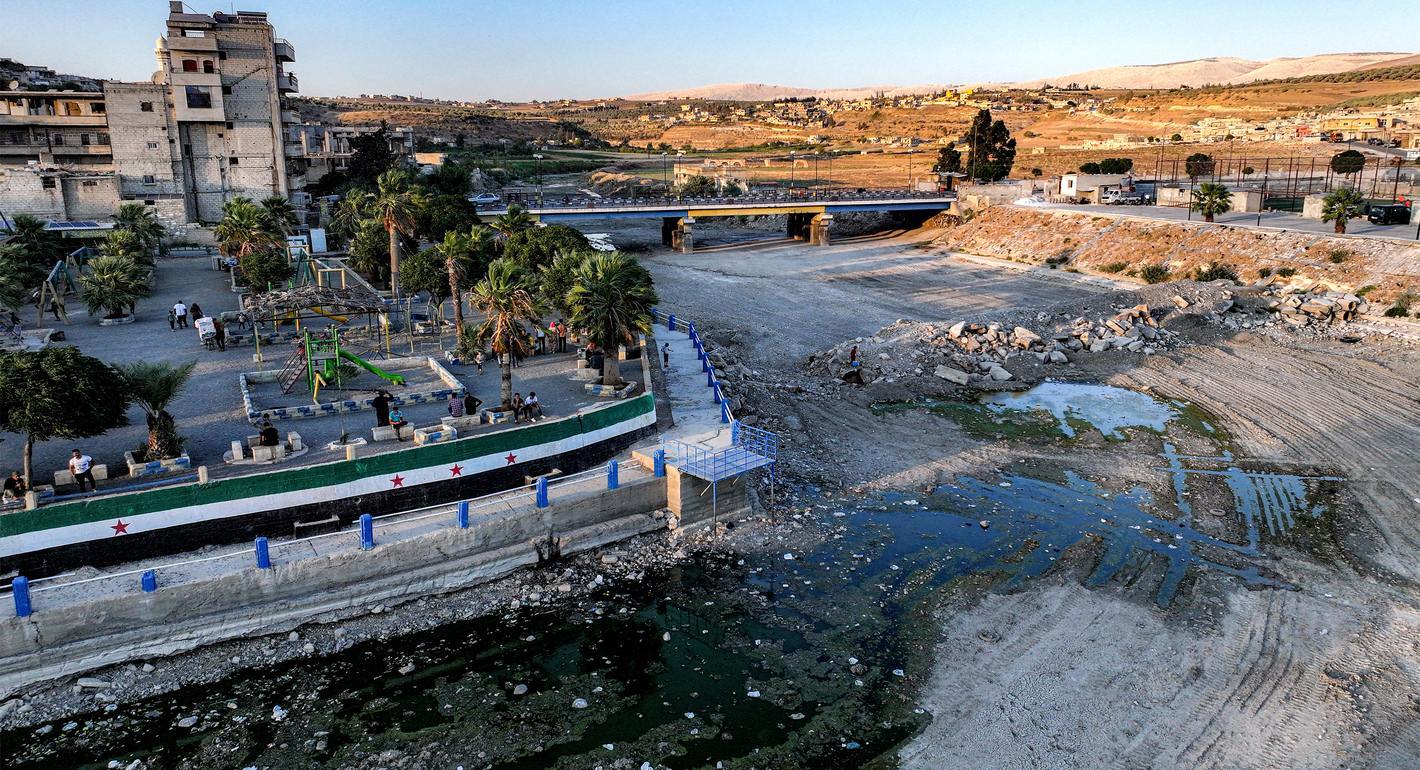
Syria’s worsening drought is no longer a seasonal crisis. This report explains what climate change is doing to rainfall, groundwater, and food security, and what solutions experts say are still possible.
Milia Esper
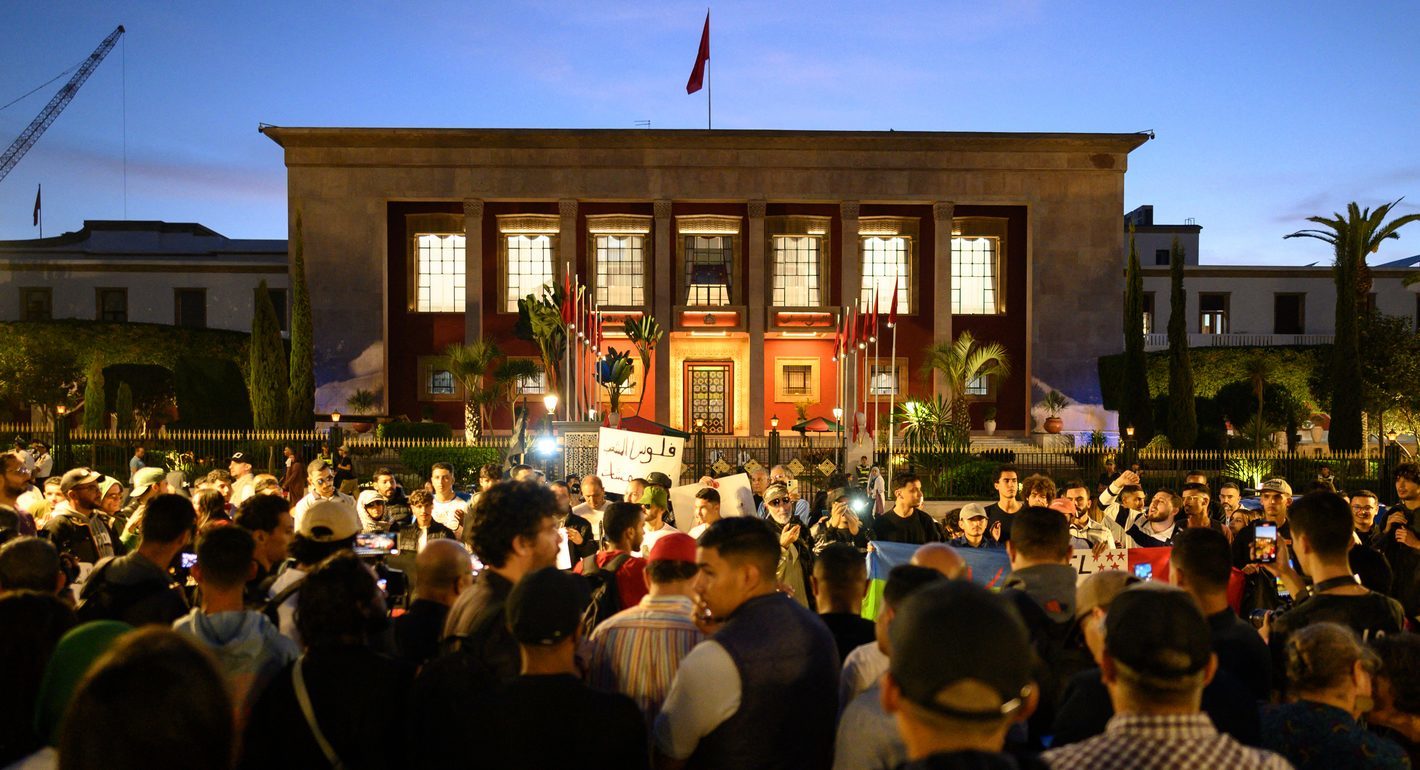
From anime heroes to online gaming communities, Morocco’s Gen Z is building a new protest culture. What does this digital imagination reveal about youth politics, and how should institutions respond?
Abdelilah Farah
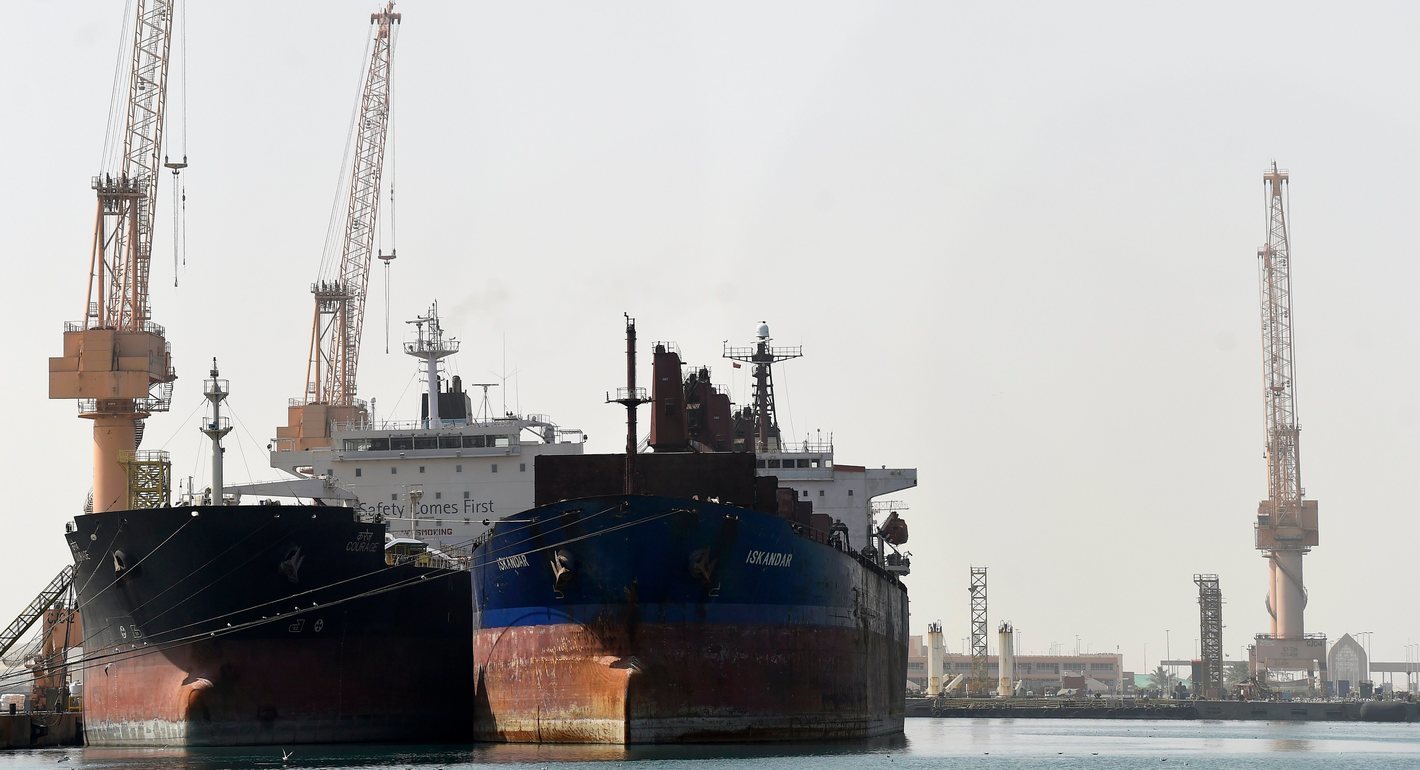
In a volatile Middle East, the Omani port of Duqm offers stability, neutrality, and opportunity. Could this hidden port become the ultimate safe harbor for global trade?
Giorgio Cafiero, Samuel Ramani
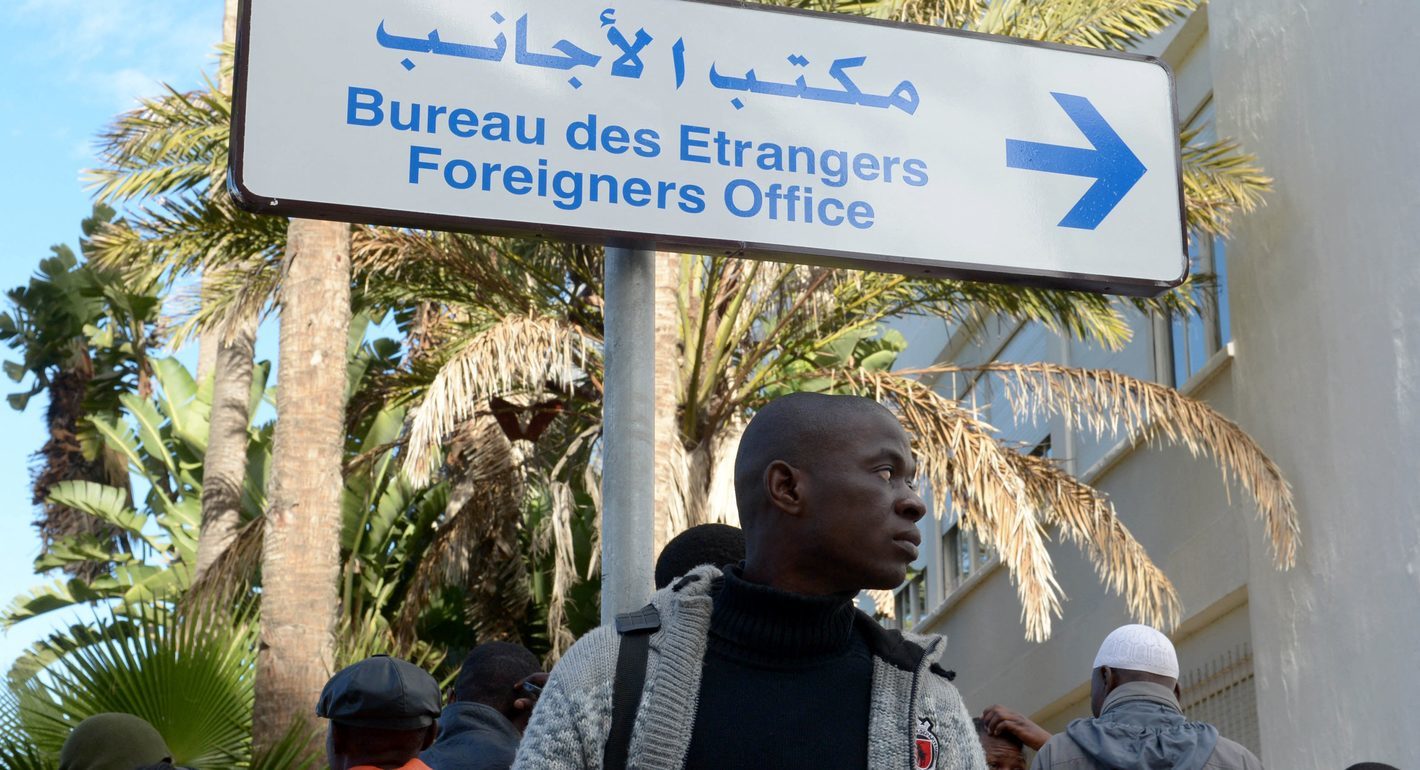
Is Morocco’s migration policy protecting Sub-Saharan African migrants or managing them for political and security ends? This article unpacks the gaps, the risks, and the paths toward real rights-based integration.
Soufiane Elgoumri
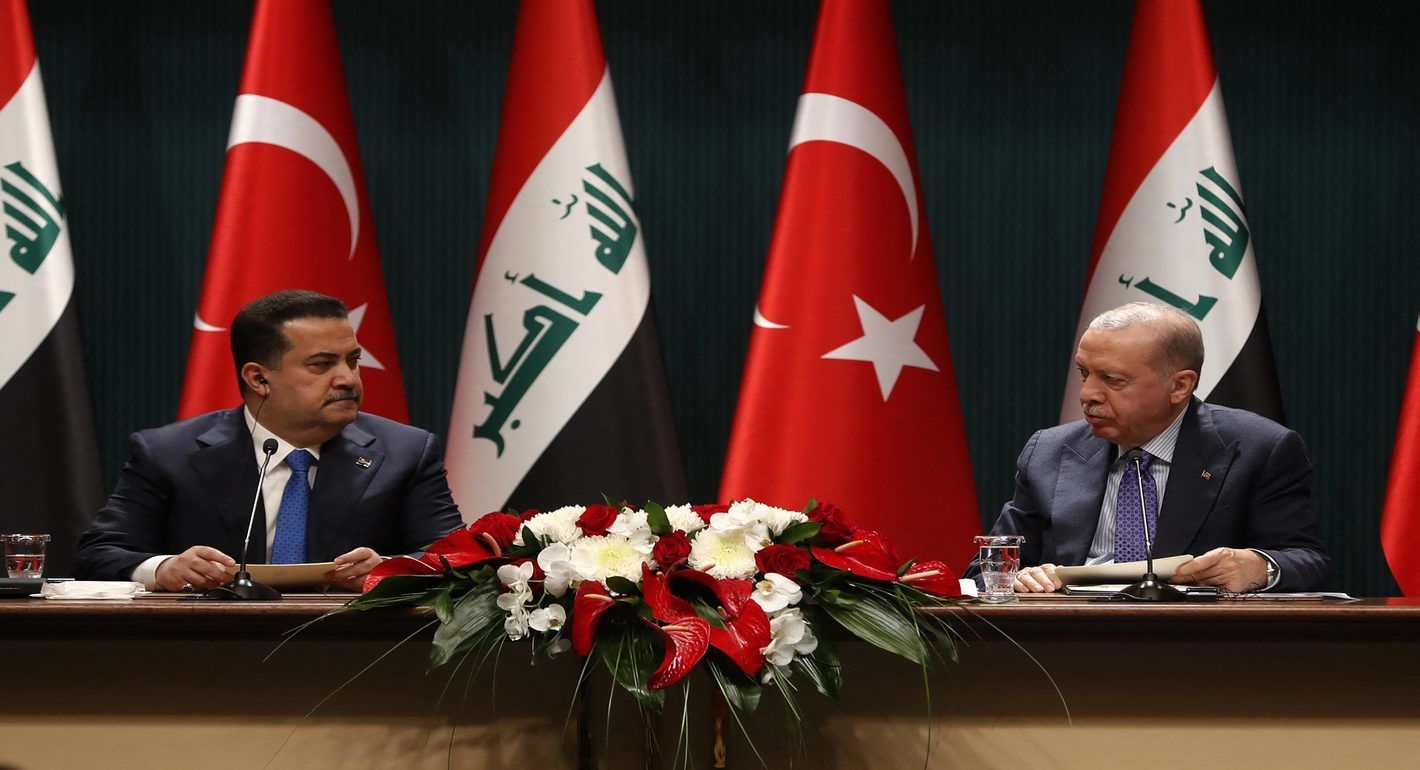
Iraq’s foreign policy is being shaped by its own internal battles—fractured elites, competing militias, and a state struggling to speak with one voice. The article asks: How do these divisions affect Iraq’s ability to balance between the U.S. and Iran? Can Baghdad use its “good neighbor” approach to reduce regional tensions? And what will it take for Iraq to turn regional investments into real stability at home? It explores potential solutions, including strengthening state institutions, curbing rogue militias, improving governance, and using regional partnerships to address core economic and security weaknesses so Iraq can finally build a unified and sustainable foreign policy.
Mike Fleet